Skills Needed to Be a Painter

Painter Fresno CA is a powerful tool that allows users to create and manipulate artwork with ease. Users can apply a variety of styles and techniques to their creations.

Art enhances our environment and can communicate complex emotions, ideas, and experiences to individuals and communities. It can even inspire new solutions and innovation.

Painting is the art of creating pictures using color, tones, shapes, lines, and textures. It is a common form of creative expression and entertainment for both professional and amateur artists. Professional painters typically use oil paints or acrylic paints on canvas cloth, while young painters often use watercolors on sheets of paper.

Some painters specialize in specific types of paintings, such as portraits or landscapes. Others focus on a particular technique, such as abstract painting or impressionism. Still others create compositions that explore themes or ideas, such as symbolism or transience.

Whether they are painting portraits, landscapes, or abstractions, painters must first select a subject to represent on their work. This may be based on real-life experiences or their interpretation of a theme or idea. The selection process can be difficult and time-consuming. Choosing a subject that is both inspirational and challenging can help a painter achieve their desired artistic outcome.

Once a painter has selected a subject, they must make preparations for the painting. This includes preparing the canvas, laying down foundation coats, covering fixtures, and removing old paint. The painter must also decide on a style, composition, and color scheme for their work. In some cases, painters must apply a protective layer to the surface of their painting, such as varnish or sealant.

Some painters may be employed by art institutions or studios, where they will have access to specialized facilities for composing and displaying their work. Others will be commissioned to complete on-site painting projects, such as public artworks or murals in schools or hospitals. Still others will sell their work directly to art collectors and enthusiasts through galleries and online platforms. Regardless of the location or environment in which a painter works, they must maintain a high standard of quality in their work and ensure that their final product aligns with the initial vision. This requires attention to detail, precision, and a strong ability to follow instructions. In addition, a painter should be comfortable working at various heights and spaces while observing all safety measures. Lastly, a good painter should be able to work effectively in teams and individually.

Scaffolding

Scaffolding is a temporary structure of poles and planks used to support construction workers, inspectors, cleaners and others who need to work at height. It is typically made from metal tubes, although there are some types that use aluminium. Those that use steel are either galvanised or painted. Some scaffolding is built using timber, and it can also be erected on stilts for some kinds of work. Teachers can also employ scaffolding in the classroom to help students with new lessons and strategies. It is best when educators employ it in a way that reduces their assistance over time as the student masters the task.

For instance, a teacher might offer multiple options for completing a simple science activity like an experiment. Then they might ask the student to evaluate each option and develop a correct response on their own. They might then begin to limit the number of choices, or even take them away entirely. This technique works well for children, but it is not always appropriate in the workplace. Some workplaces have specific safety regulations for scaffolding, including requiring that it be painted in a certain color so that it is easily identified and not stolen.

A basic scaffold consists of a standard or upright tube at the top and ledgers, or horizontal tubes, underneath. The standard is fitted with a pair of right-angle couplers, putlogs or single couplers at the bottom and cross braces to increase its rigidity. The ledgers are then joined with a cross-brace called a bridle tube or through ties to a main transom at the centre of the scaffold. For inspection purposes a bay size of up to 2 metres is allowed, but on softer surfaces a sole plate is required to spread the load.

All parts of a scaffold must be in good condition and securely fastened, especially if they are going to be raised above the ground or floor of the building. If a part of the scaffold is faulty or unfit for its intended purpose it can collapse, endangering the safety of workers below. It is important that all scaffolding be constructed, maintained and operated by trained workers.

Manual Dexterity

Manual dexterity refers to the ability to move your hands and fingers with precision. This is an important skill for painters to have because it allows them to create detailed paintings. It also helps with fine motor skills. In addition, studies have shown that taking part in artistic activities like painting can help slow down the onset of diseases such as Alzheimer’s and dementia.

In order to develop your manual dexterity, you can practice by doing handicrafts or knitting. You can also hone your skills by playing a musical instrument or learning a new language. In fact, some dental schools actually test applicants on their manual dexterity!

Communication

A painter works with both people and materials, so he must have good communication skills. He should be able to clearly explain how to complete each task, listen to what the customer wants, and answer any questions they may have. He should also be able to provide accurate estimates of how long it will take him to complete the job. This is especially important if he is self-employed.

In addition to verbal communication, painters also use visual cues when working with customers. Eye contact is an important part of this process, as it conveys trust and authenticity to the other person. It can also help you understand emotions and non-verbal signals that the other person might be expressing.

Whether you’re a professional or not, effective communication is crucial to any career in the arts. As a painter, you need to be able to communicate with clients about what they want their home or business to look like and how it will change with the addition of new colors and textures. This is a big part of how you build rapport with your customers and keep them satisfied with their work.

In many states, it is a requirement for painters to be licensed to do commercial painting jobs. This is to protect consumers from unlicensed contractors who may damage property or not do quality work. You should always choose a licensed contractor who has experience and is well-versed in the best practices for each type of job.

A good painter should have a strong aesthetic sense. This is especially true for exterior work, as it’s important to know what looks good in each environment. For example, a painter should be able to choose the right color for a house that will blend in with its surroundings and not stand out too much.

In addition to these technical skills, a good painter must have strong organizational skills to plan and manage projects effectively. He should also be able to create his own work space that provides him with the tools and resources necessary for his craft. This could be a studio in his home, a rented workspace, or an art collective. This work space should have tables, easels, and storage areas for paints and other supplies.
What Are the Advantages of 3D Printing?

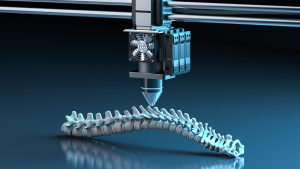
3D Printing Arizona is the process of using a computer to create objects that are built up layer by layer. These objects can be made of various materials, including polymers, metals, and ceramics.

3D printing offers many advantages over traditional manufacturing processes. These include faster product development, cost-effective market testing, and on-demand manufacturing.

3D printing has allowed faster design iterations, allowing designers to improve a product’s or component’s shape. This translates into a better product that will satisfy customer needs.

Additionally, suppose a design requires the incorporation of complex geometries that would be difficult to machine or cast. In that case, 3D printing can allow for part consolidation by eliminating the need to create separate parts and pieces. This can dramatically reduce the overall number of parts required for a product, which in turn lowers manufacturing costs by cutting down on production time and material consumption.

The 3D printing process works by adding layer upon layer of melted plastic, metal or other materials to produce an object. This is in stark contrast to traditional manufacturing methods, which are based on subtractive processes, similar to sculpting away clay, which can be very costly due to the loss of precious material.

For industrial manufacturers, especially those introducing a large number of new products to the market a year, this can mean significantly reduced development time and improved time-to-market. It can also reduce reliance on an often cumbersome and expensive global supply chain and help companies stay more agile and responsive to changes in customer demand.

This is particularly true in industries where customers place a high value on quality over quantity, such as the automotive and aerospace industries. For example, Ford’s implementation of 3D printing has helped it to reduce its cost of prototyping by up to 90% and accelerate time-to-market. This is because designs that could take months to fabricate using CNC machinery or injection molding can be completed in under a week with a 3D printer.

Increased Innovation

3D printing allows for an increased level of innovation within manufacturing. The process uses a layer-by-layer approach to create a physical prototype that can be used for iterative testing and refinement. This can help to identify any design flaws or improvements to a product faster than traditional methods would allow.

This process also makes it easier to create complex products with intricate details. For example, it’s possible to print multi-faceted or curved surfaces that would be impossible or very expensive using subtractive or injection processes. 3D printing also allows for the creation of specialized tools, such as jigs and molds, that can be used to streamline production or reduce costs. In addition, it is possible to 3D print spare parts or replacement components for existing equipment, eliminating costly downtime caused by breakdowns.

The emergence of 3D printing technology has been fueled by advances in material science. Many of these advances have allowed for greater strength, durability and elasticity in finished prints. This has opened up new possibilities in a wide range of industries. For example, 3D printed prosthetics are currently being developed and used by patients in lieu of costly limb replacements. This has been made possible by the development of materials that are able to mimic human bone and muscle structure, while also being incredibly strong.

This technology could be the catalyst for a major shift in manufacturing. For example, it could enable businesses to produce their own jigs and molds, reducing the cost of outsourced production services. It could also make it much more economical to produce a small run of products, potentially eliminating minimum order quantities and lead time/logistics delays. In addition, it could lead to greater efficiency and sustainability in production, reducing waste and cutting back on the use of raw materials.

Cost-Effective Market Testing

3D printing translates digital CAD files into a three-dimensional physical solid object by depositing material layer by layer. The technology is ideal for product development because it cuts costs and reduces risk. This means a business can test out its idea before investing large sums of capital into tooling, and it can make use of profits generated by sales to fund future production runs.

Moreover, the speed of 3D printing allows for on-demand manufacturing. This on-demand approach eliminates the need to stockpile products, reducing operational expenses and storage requirements. Furthermore, it enables brands to respond to market trends and customer feedback quickly by altering product designs or adding new features.

Aside from cutting back on materials waste, 3D printing also conserves energy. In addition, the printing process brings manufacturing closer to consumers, thereby reducing transportation needs and fuel consumption. This positive impact on the environment can help offset carbon emissions pumped into the atmosphere by factories.

Domestic 3D printers are increasingly becoming available for home use. While early-adopters have been using these machines to create ornamental objects, a wide variety of practical applications are now being explored by makers and enthusiasts. These range from backscratchers and coat hooks to gears for woodworking machines. The rapid development of new materials for use with 3D printing is accelerating the growth of the industry, and companies are implementing processes to capitalize and expense R&D costs that lead to commercially viable products. However, there are still challenges to be addressed in the adoption of 3D printing by the mainstream. For one, the technology isn’t yet cost-effective enough for mass production, and the upfront investment in a professional-grade printer can be prohibitive.

Better Quality Prototypes

Traditional manufacturing methods, including injection molding and machining, require expensive tools and molds to produce prototypes. 3D printing eliminates this cost and enables rapid prototyping with on-demand production of prototype patterns.

However, there are a number of challenges that can impact the quality and effectiveness of 3D printed prototypes. These include:

Print Failures: Issues like nozzle clogs, filament jams, or power outages can disrupt the printing process and waste material. To avoid these issues, calibrate the printer regularly, use high-quality filament, and invest in uninterrupted power supplies.

Prototype Structural Weaknesses: Issues like poor layer adhesion or inadequate infill density can compromise the structural integrity and functionality of prototypes. To resolve these problems, optimise the infill pattern and density, adjust layer heights, and reinforce critical areas with additional shells or supports.

Material Brittleness: Certain materials are brittle and can break easily, making them unsuitable for use in functional prototypes. To overcome this limitation, select more durable materials and explore post-processing techniques.

Lack of Quality Finish: Poor surface finish and detail resolution can detract from the usability of prototypes. To improve the quality of prints, optimise printing parameters and design features to achieve the desired mechanical properties, chemical resistance, and aesthetic appearance.

Printing Time: Printing time varies depending on the size and complexity of the prototype, as well as the quality of the print. To reduce printing time, utilise multiple printers for parallel processing and optimize the print settings to balance print quality with printing speed.

Customization

The emergence of 3D printing has opened up an opportunity for mass customization, giving consumers the freedom to personalize products to their exact preferences. Mass customization, when done right, can help businesses build a stronger brand image and increase customer satisfaction.

Advancements in CAD software and 3D printer technology have made it easier for manufacturers to create and produce customized products on a large scale. With a digital model, designers can alter and test different design variations before they make the final product, and if necessary, change it to better suit the consumer’s needs and preferences.

Another advantage of mass customization using 3D printing is shorter lead times for prototyping and manufacturing. Rather than waiting weeks if not months for custom molds or tooling to be created, manufacturers can quickly print prototypes that are virtually identical to the final end-use product, saving both time and money.

3D printing also offers greater flexibility in production, with the ability to produce a wide range of parts and materials on demand. Unlike traditional injection molding techniques, which require a manufacturing setup for specific products and large production series, 3D printing can directly adapt to any product. This helps to shorten supply chains and improve resilience.

The growing popularity of mass customization also means that businesses can track and gather valuable data about consumer preferences and behaviors. By collecting this information, companies can develop more targeted marketing campaigns and enhance their overall business strategy. Combined with the benefits of 3D printing, these advances can offer a much more powerful and profitable solution to traditional mass production methods. Ultimately, mass customization using 3D printing is a win-win scenario that can help manufacturers, consumers, and the environment.

Navigation